Eugene Payson True
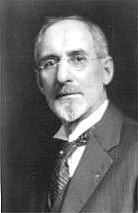
Picture of Gene True
(Click here for another)
Husband:
Eugene Payson True Born: in Hope, ME 19 July 1859.
Died: in Wrentham, MA 17 September 1940; buried as was his wife in Hope
Grove Cemetery, hope, ME.
Father: Edward True, Jr.
Mother: Olive King Payson.
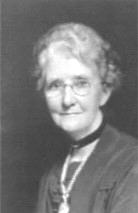
Picture of Annie (Milnes) True
Wife:
Anne Elizabeth Milnes
(always known as Annie) Born in Headingley, England 3 December 1853.
Died in Wrentham, MA, 5 November 1942, buried in Hope Grove Cemetery, Hope,
ME.
Father Jabez Milnes of Yorkshire, England.
Mother Hannah Smalley.
Married in Wistow, Yorkshire, England 27 December 1888.
We have a letter written by Gene (as Eugene
was called) on 20 February 1876 when he was seventeen years old, from the
Normal School in Castine, ME, to his sister, Rose. He told her that he was
settled in now that he had been at the school for two weeks; that the examination
had been very easy and he was pleased that he had been placed in the advanced
course; his subjects were Arithmetic, Grammar, Geography, Physiology, Reading
and Spelling; and he had a room at Mrs. Christian's where there were seven
other fellows and each of the eight students paid her a dollar for the four
rooms and for doing their cooking. Family tradition says that Gene did do
some teaching before he went to England to join his older brother in business.
Another letter by Gene written to his brother,
LaForest (called Foss), placed Gene in Liverpool, England, by 2 November
1880. He stayed in England from 1880 until 1891. He married there in 1888
and his first son was born there in 1889. He was in business with his brother,
Edward Alonzo (called Lon), until that business was closed and they returned
to the States.
It might be implied in the following exceprts
from a letter by Gene from Liverpool written to his brother Foss, 9 June
1883, that Gene did not feel settled in England and may even have been longing
for his boyhood town in Maine:
"Fact is I haven't decided in my own
mind what I shall do. Lon would like me to stay here and I may do so. I
often think it would be better for me to come home. Had I something to do
when I got there, or did I know what I want to do, I could soon decide the
question. At one time, I did think I would commission you to buy the F.
M. farm ... but will not just yet ... should have to borrow money and it
looks like rather up hill work. Don't know much about farming and might
not be a success. What do you think about it? What price do they put on
the farm and what about expenses and return of the farm...? Should I remain
here, would hardly feel settled for should Lon give up the business in 5
or 10 years I should give it up too, and would then probably be as undecided
as now. If I come home this summer, will wait till I get there and see what
jobs seem open to me."
Other letters Gene wrote from England indicated
that he had "never felt the western fever" and seemed not settled
in his mind what his future course should be. After the two families returned
to America, they lived together in Newton Highlands, MA, for a short while
until Gene and his family moved to Readville, MA. There their second son,
Osmond, was born in 1896. One letter of Gene's showed that he supplied Foss
with a few products bought in Boston, MA, which Foss sold in his store in
Hope, ME. Also, Foss sent to Gene products for him to sell in stores in
Boston, and the surrounding areas. All this seemed to be going on while
Gene and his brother, Lon, were in business in Boston, the same kind of
business they had been doing in England. Gene's son, E. Payson True, indicated
that the American business was not as prosperous as the English business
had been but one where they made a living and the families always ate three
times a day.
In E. Payson True's book, Remembrances
of E. P. True, p. 45, he states, "... for some reason, we (Gene's family)
gave up the house (in Readville) and went to Hope, Maine, in June staying
with Uncle Foss and Aunt Kate through the next winter. We came back to Massachusetts
in the spring of 1897..." The mystery about this stay in Maine may
now be solved with the information in a letter we found among other family
letters. This letter was written by Gene in Readville, 12 Feb. 1895, to
his brother Foss in Hope. In it he says, "You speak of my going in
with you ... I am not in a position to give you much financial aid now,
if you have enough business for two, and enough work for two, and can afford
to employ me and give me living wages I might but in a 12 months with you
and see how I liked it, and if things turned out so I could make an investment,
with prospects of fair return, perhaps we could do something. If two were
there it would relieve one so he could drum up trade and if orders could
be booked forward for the various things you can pack there (Foss owned
and ran a canning factory which he started in 1880 as well as the general
store at Hope Corner), the canning might be extended to quite an extent."
Our guess is that Gene and his family did go to Hope to try out this proposal
and found that the trade was not sufficient to support the two families
or that the arrangements did not work out to everyone's satisfaction.
After that time, Gene seemed to settle
down and he and his family lived in Readville and Hyde Park, MA, with Gene
working in Boston until he retired.
Payson True, Gene's son, said of him that
he was a fine man, a good father, was quiet in his speech and actions and
had a good sense of humor.
Annie, Gene's wife, was a small, precise,
English lady, a musician from a musical family who was an accomplished pianist
and organist. She and her sister, Jane, wife of Gene's brother Lon, seemed
happy in this country even though they were away from their own English
relatives. These sisters were welcomed into the large True family which
must have seemed to them to be as American as apple pie, were teased about
their English ways and joined in the resulting laughter with everybody,
and enjoyed their new life here according to the memories of Annie's sons,
Payson and Osmond.
Eugene Payson and his wife Annie Elizabeth
(Milnes) True had two sons:
* Edward Payson, b. Bootle, England 30
Sept 1889; d. Concord, MA 7 Feb. 1987; m. (1) Laura Keene Darling; m. (2)
Doris (Lyons) Boyd.
* Osmond Smalley, b. Readville, MA 4 March 1896; d. Westwood, MA 12 Sept
1979; m. Alma Katharine Barber. No issue.
return